
Haimanti Roy
Since the path-breaking work in the 1990s on women abducted during the Partition violence in divided Punjab, at least two generations of much needed scholarship have built upon and extended the literary archive of the years of trauma and displacement that followed the Partition of 1947.
Sekhar Bandyopadhyay
Sekhar Bandyopadhyay, Professor of Asian History at Victoria University of Wellington, New Zealand, has earlier enriched our understanding of South Asian history by his ground-breaking research on the complex relationship between caste, society and politics.
Sanjay Subrahmanyam
Is Indian Civilization a Myth? is a collection of articles by Sanjay Subrahmanyam, most of which have been previously published in Outlook, India Today and the London Review of Books.
Faisal Devji
It was not so long ago that Mohandas Gandhi was, at least to the academic world, a largely forgotten figure.

Subrata Ghatak
In economic matters judgements based on statistically tested hypotheses are surely to be preferred to hunches or guesses however clever. Where however ‘facts’ derived through statistical analysis fly in the face of what is widely believed to be the reality, before proceeding to accept them without reservations one…
Galal-El-Rashidi
In the very first paragraph of the first chapter of his book the author claims that the Arab community has played a significant role both in the collapse of the old international order and in setting in train the quest for a new one. While this categorical statement may sound chauvinistic to some, one cannot but agree with him on this point…
Baldev Raj Nayar
Indo-U.S. relations have followed a turbulent course. The appreciation of American support to India’s Independence struggle was soon dissipated by the U.S. arming of Pakistan following their Mutual Aid Treaty of 1954. Thereafter U.S. sympathy for India, in the wake of the Chinese aggression…
Kenneth W. Jones
1977
Social history as an academic specialization is quite recent and in India it is still a largely unexplored field. While in the last few years some critical re-examination has been done of the role of Raja Rammohan Roy as a modernizer…
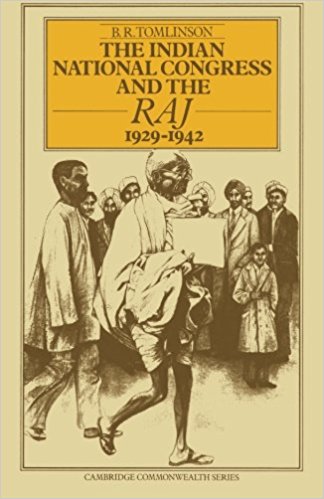
B.R. Tomlinson
This is a study of British and Indian policy-makers in the penultimate years of the raj. The British, both in London and Delhi, could not see that the days of British rule were numbered and planned on the basis of staying on in India indefinitely by utilizing the Princes and the Muslim communal elements against…
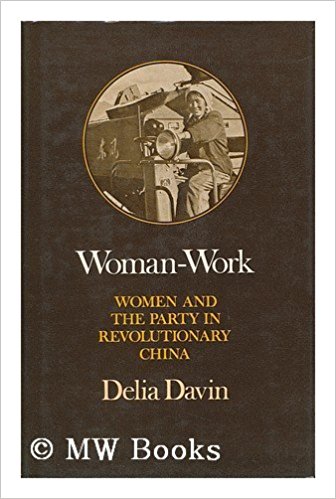
Delia Davin
1977
Delia Davin’s study of the rise of the working woman in China is a sober, factual, historical account giving insights of special interest to us in India of an almost identical system of social constraints upon women, but in a wholly different social setting. We never had bound feet to cripple a woman’s usefulness and productivity…
M.N. Srinivas
The Remembered Village illustrates most persuasively M.N. Srinivas’s central concerns. First, a healthy respect for the rural person, his life style, his know¬ledge. While social scientists and ad-ministrators are constantly figuring out programmes for rural folk on the assumption that they…