
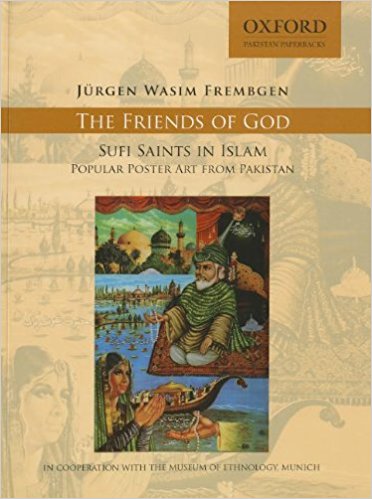
Jurgen Wasim Frembgen
The poster, by its very definition, is an ephemeral product, and has only recently acquired the status of popular art. Tracing its history in a long essay entitled ‘Posters: Advertisement, Art, Political Artifact, Commodity’, Susan Sontag differentiates between the political poster
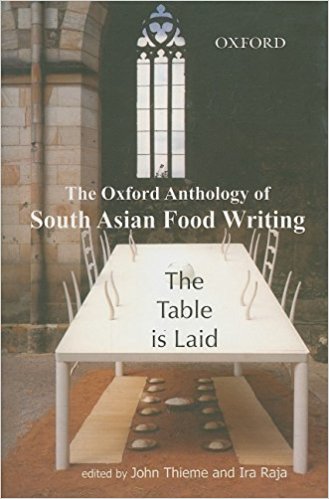
John Thieme and Ira Raja
Inspired by A.K. Ramanujan’s essay ‘Food for thought’, the present anthology of South Asian Food Writing was whipped up to respond in part to fulfil his desire for a more diachronic study of food discourse though not trying to provide ‘the social history’ that he craved for.
Samrat Upadhyay
2007
Samrat Upadhyay, a Nepali author who went to the US at the age of 21 and who has been living there ever since, first studying and then teaching creative writing at various universities, hit big on the international literary scene with his debut Arresting God in Kathmandu, in 2001.
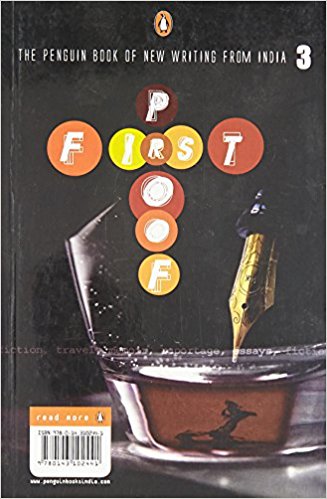
Sankar
The second volume of Penguin’s annual anthology of new writing from India which came out in 2006 showcases a range of exciting and original work. It certainly introduces ‘new writing’ although not necessarily new writers—many of the contributors appear to be established writers with several literary awards to their credit.
Moni Mohsin
I read Moni Mohsin’s The End of Innocence at one sitting. This debut novel is a sensitive rendering of a childhood friendship between two young girls in Pakistan, from different social realms.
Khalid Hasan
Of the many voices to come out of the subcontinent in the last century, Faiz Ahmed Faiz’s (1911-1984) is perhaps the strongest. He has been described as many things—the misunderstood Marxist, the compassionate humanist, an irresistible charmer and of course the revolutionary poet.
Razia Fasih Ahmad
Curled in the end lies a beginning and in every beginning lies the end of something old. Never is this truer than in the case of countries that are born after prolonged periods of parturition or when they are hived out of old nation states after much blood has been shed.
Jasbir Jain
Pichhwa the wrestler—a character from Intizar Husain’s classic An Unwritten Epic—a larger than life, fearless, action hero who has fended off a Jat attack on his UP village Qadirpur, receives the news of Pakistan’s formation with an ‘immense chill’.
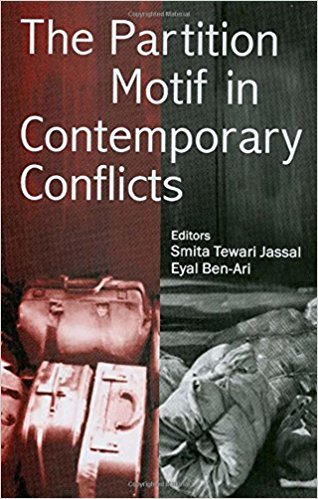
Smita Tewari Jassal and Eyal Ben-Ari
The anthology edited by Smita Tewari Jassal and Eyal Ben-Ari brings together essays from varied disciplines including memory studies, social anthropology, sociology and literary criticism that come to terms with the partition motif in contemporary conflicts.

Fakrul Alam
This is a welcome addition to the critical apparatus available on sub- continental English writers. South Asian writing is as usual an in- vention of the western academy, a convenient label that sub-continental critics can use to talk about issues that concern the nations of the region. However,
Minoli Salgado
When the (resident) Sri Lankan writer Nihal De Silva passed away, it was sad that few in India had heard of him let alone read the Gratiaen award winning book The Road from Elephant Pass. The few copies that did make their way outside the island nation were eagerly consumed, as supply was meagre.
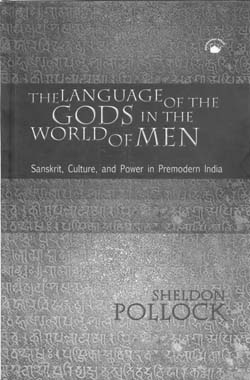
Sheldon Pollock
The foundation of empire is art and science. Remove them or degrade them, and the empire is no more. Empire follows art and not vice versa… (William Blake) In the great books of India, an empire spoke to us… (Emerson)
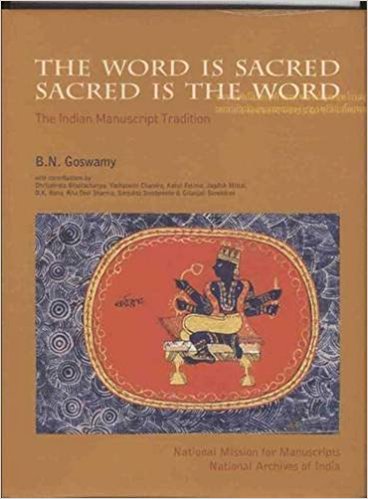
B.N. Goswamy
The Word is Sacred is a catalogue for an exhibition on Indian manuscripts that was part of the Frankfurt Book Fair last year, where India was the guest of honour. The exhibition itself was organized through collaboration amongst a number of institutions and individuals, under the aegis of the National Mission for Manuscripts. Professor B.N. Goswamy,
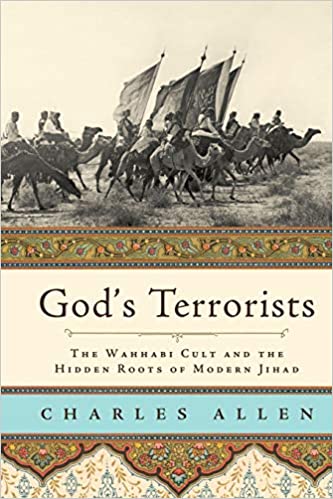
Charles Allen
Charles Allen is not a stranger to India. His ancestors have been associated with India for generations. Charles came into prominence as the author of The Plain Tales of the Raj and he followed it up with several very readable accounts of little-known events in British Indian history
Sudha Raman
The concept of nuclear deterrence has proved to be a baffling enigma. Very often perceived in many different ways and despite all theoretical challenges and analytical condemnation—it survives. As the reverie of a nuclear weapons-free world
D. Suba Chandran
Despite manifest changes in the living standards of a vast number of people in virtually all the South Asian states, the subcontinent is still mired in a multitude of crises of both conventional and non-conventional kinds.
Abdul Sattar
Pakistan has often been referred to as a paradox and one of its more perceptive commentators, Shafqat Ali Shah, a former Federal Minister observed that ‘Pakistan and Pakistanis generally defy logic’. This abiding characteristic can be interpreted in many ways but it does come to mind when reflecting over Abdul Sattar’s recall of Pakistan’s foreign policy.

Devin T. Hagerty
South Asia’s interaction with the rest of the world has varied over time, depending on the global agenda of the major powers, policy choices and internal politico-economic dynamics of each state of South Asia.
Paul Brass
Paul Brass had already published fifteen books before he came out with this relatively slim volume late last year, most of them on ethnic politics and violence in South Asia, an area of research to which he had devoted almost his entire academic career of well over four decades.

Tariq Rahman
The language question in Pakistan has remained a politically contested one since the creation of Pakistani state in 1947. In a multilingual society like Pakistan, language becomes an important marker of identity of various communities and groups of people.